
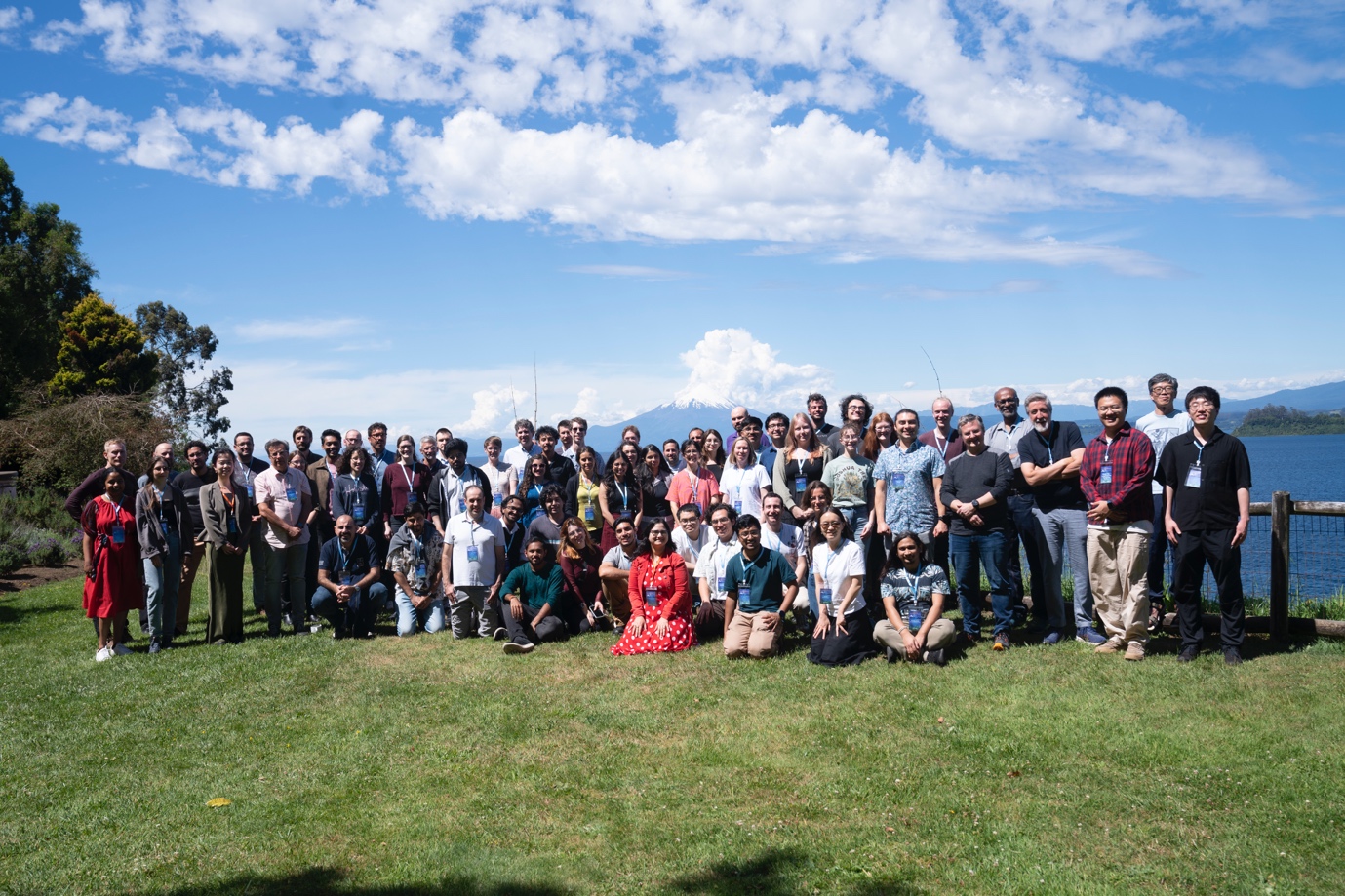
The baryon cycle is a fundamental driver of galaxy formation and evolution, connecting star and black hole formation, feedback processes, and the exchange of gas between galaxies and their surrounding environments. It represents a key physical framework for understanding galaxy evolution and the large scale structure of the universe. With advances in multi wavelength observational facilities and continued progress in theoretical modeling and numerical simulations, studies of the baryon cycle are entering a new phase characterized by increased precision and more systematic approaches. To promote international exchange and collaboration in this field, the conference “ The Baryon Cycle from Reionization to Cosmic Noon” was held in Puerto Varas, Chile, from December 8 to 12, 2025. The meeting was hosted by the South American Center for Astronomy of the National Astronomical Observatories of the Chinese Academy of Sciences (CASSACA), and co organized by the French Chilean Laboratory for Astronomy (FCLA) and the Universidad de Chile. The conference attracted more than 90 astronomers, including over 70 participants from Chile, the United States, France, Germany, Italy, Spain, the United Kingdom, Japan, India, and Australia.
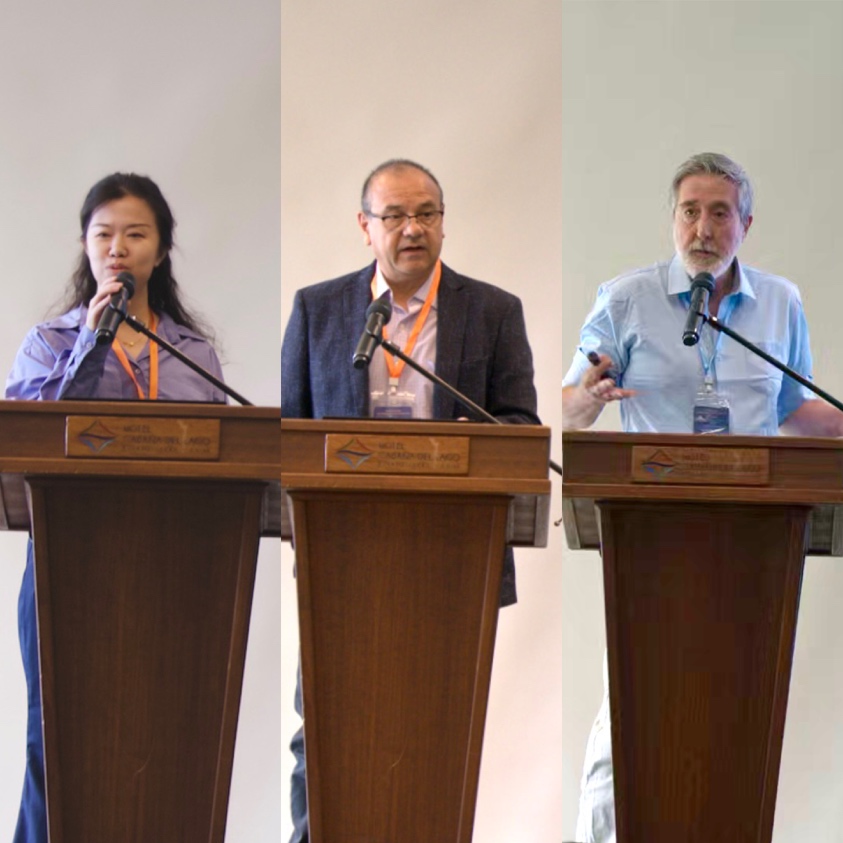
The conference was co chaired by Researcher Siwei Zou and Researcher Jiasheng Huang. At the opening ceremony, Researcher Siwei Zou and Professor Felipe Barrientos, Head of the Department of Astronomy at the Pontifical Catholic University of Chile and Director of the FCLA, delivered opening remarks. Professor Barrientos highlighted the role of CASSACA in advancing China Chile collaboration and training young researchers, and emphasized that the conference aimed to build an international platform integrating observations, theory, and numerical simulations of the baryon cycle.
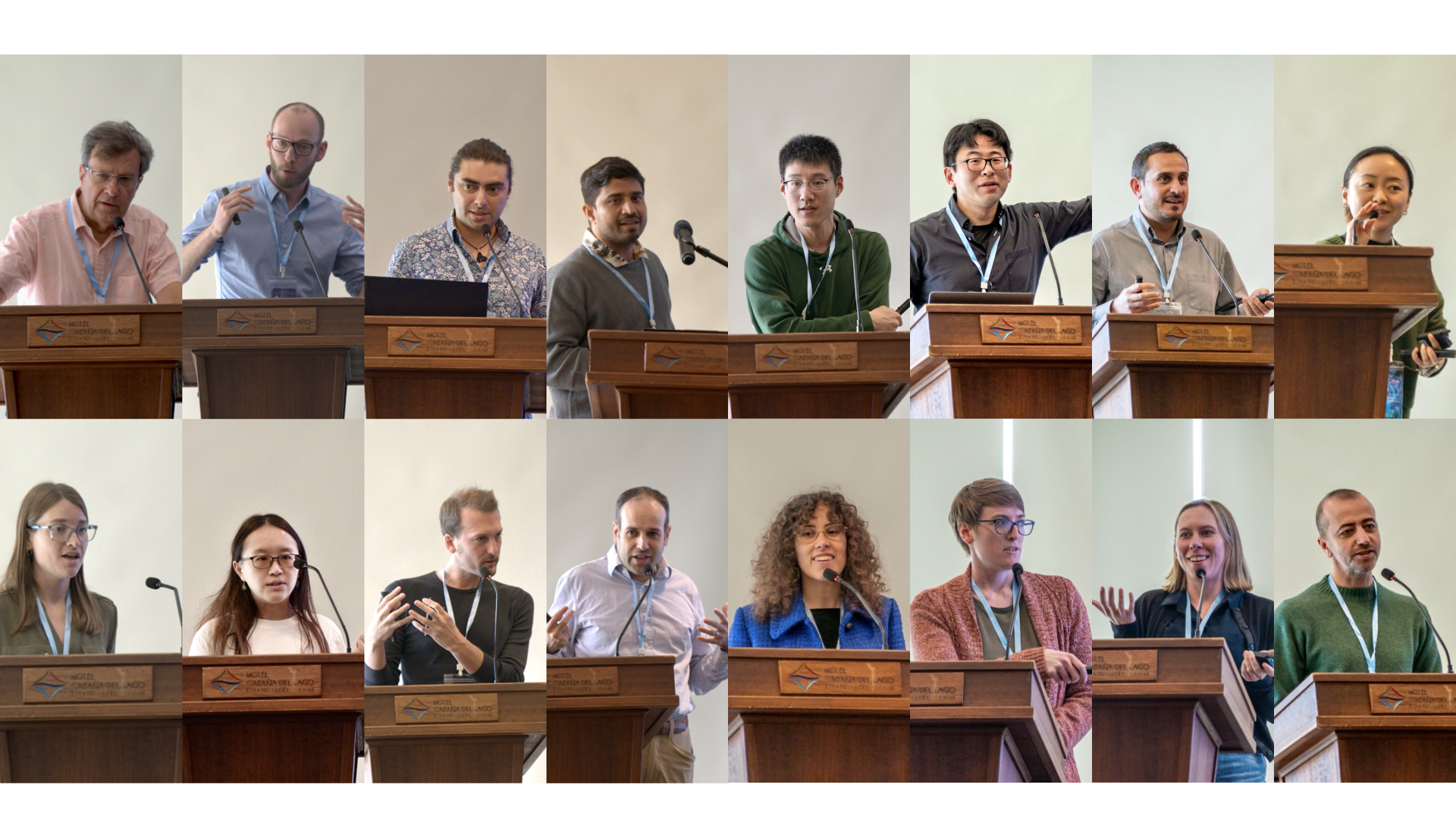
The program featured plenary review talks by leading international experts, covering observational and numerical studies of gas interactions with host galaxies and their environments at high redshift, applications of state of the art facilities including the ELT, frontier observations and theory of the first generation of stars and earliest galaxies, and the role of active galactic nuclei and so-called “little red dots” in galaxy formation and large scale structure evolution. These talks provided new perspectives on baryon circulation across multi-scales. Invited speakers included Professor Roland Bacon of the Centre de Recherche Astrophysique de Lyon and Principal Investigator of the VLT MUSE instrument, 4MOST instrument scientist Jens Kristian Krogager, Professor Rob Simcoe, Head of the Department of Astronomy at the Massachusetts Institute of Technology, Researcher Hakim Atek from the Institut d’Astrophysique de Paris, Professor Masami Ouchi and Researcher Enrico Garaldi from the University of Tokyo, Professor Jing Wang from Peking University, Professor Hui Li from Tsinghua University, Researchers Valentina D’Odorico, Fabio Vito, and Roberta Tripodi from the Italian National Institute for Astrophysics, Professor Nicolas Tejos from the Pontifical Catholic University of Valparaiso in Chile, Professor Claude André Faucher Giguère from Northwestern University, Professors Ralf Klessen and Dylan Nelson from Heidelberg University, Professor Sowgat Muzahid from the Inter University Centre for Astronomy and Astrophysics in India, Researcher Feige Wang from the University of Michigan, Researcher Grace Telford from Princeton University, Researchers Maren Cosen and Mandy Chen from the Carnegie Observatories, and Researcher Louise Welsh from Durham University.
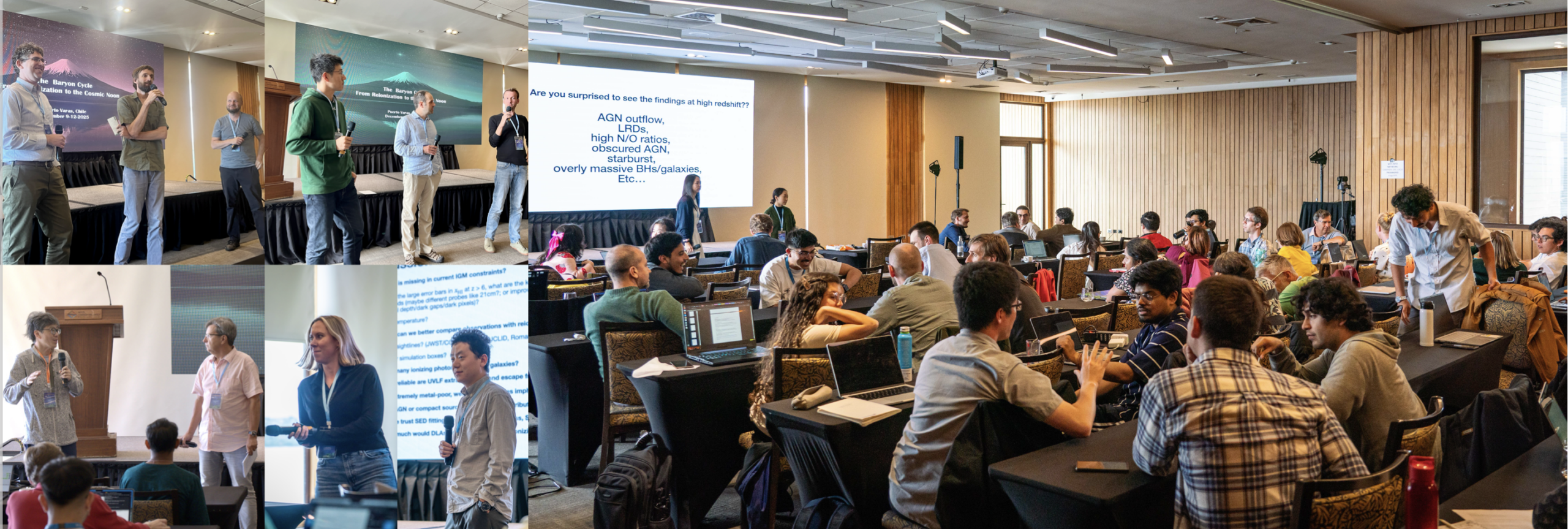
At the closing ceremony, Researcher Siwei Zou summarized the main outcomes of the discussions and thanked the organizers and participants. Professor Sebastian Lopez of the University of Chile praised the conference for presenting cutting edge results and fostering international exchange among early career researchers, and expressed the hope that it would develop into a recurring conference series alternately hosted by Chinese and Chilean scientists.
(Photography: Zheng Zhang, Joaquín A. Hernández-Guajardo, Kaixiang Wang)